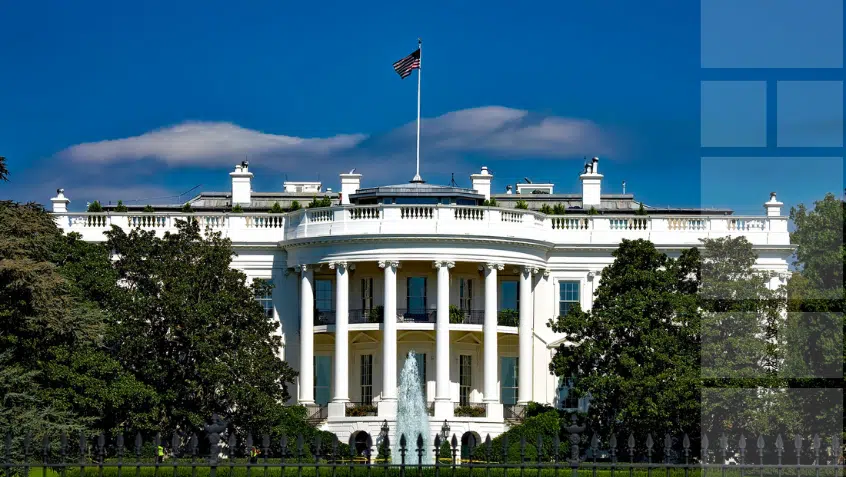
On Friday the White House released President Trump’s budget request to Congress for fiscal year 2027 (FY27), which begins on October 1. It requests significant funding changes, including cuts to programs that help older adults and people with disabilities build health and economic security.
Overview
The budget requests $111.1 billion in discretionary budget authority for the U.S. Department of Health and Human Services (HHS) for FY27. This is a $15.8 billion (12.5%) decrease from the FY26 enacted level.
The administration is again seeking to reorganize HHS by establishing the Administration for a Healthy America (AHA).
Despite the idea being rejected by Congress last year, the administration is again seeking to reorganize HHS by establishing the Administration for a Healthy America (AHA). Under the White House’s vision, this new agency would fold in several current HHS components, including the Substance Abuse and Mental Health Services Administration (SAMHSA), the Health Resources and Services Administration (HRSA) and some functions of the Centers for Disease Control and Prevention (CDC).
Another shift combines the work formerly carried out by the Administration for Children and Families (ACF) and the Administration for Community Living (ACL) into the Administration for Children, Families, and Communities (ACFC). According to the White House, the consolidated ACFC “supports the economic and social well-being of families, children, older adults, and people with disabilities.” The FY27 ACFC budget request is $28.7 billion, nearly $7 billion below FY26 levels.
Important Programs Targeted for Cuts
The budget would cut projected spending for many programs that support families and communities. For example, it would eliminate the Low-Income Home Energy Assistance Program (LIHEAP), which helps six million families with young children, older adults, and people with disabilities pay their heating and cooling bills, as well as the Community Services Block Grant (CSBG) program, which helps local organizations assist five million low-income families and individuals each year.
It would eliminate the Low-Income Home Energy Assistance Program (LIHEAP).
It would also slash funding for HIV treatment and prevention, refugee resettlement, affordable housing, environmental programs, workforce and education support, rural initiatives, chronic disease prevention, and federal emergency response preparedness.
Medicare Program and Beneficiary Resources
Unlike last year, the budget would preserve funding for State Health Insurance Assistance Programs (SHIPs). The HHS Budget in Brief notes that by engaging “with Medicare beneficiaries to provide one-on-one counseling on informed enrollment and benefit decisions” SHIPs “ultimately reduce costs to both the beneficiary and Medicare.” The program would remain with other ACL functions, at ACFC.
The budget would preserve funding for State Health Insurance Assistance Programs (SHIPs).
The budget documents note the Centers for Medicare & Medicaid Services (CMS) “is committed to providing Medicare beneficiaries with tools to understand their coverage and benefits” including with investments that ensure the “1-800-MEDICARE call center will answer beneficiary calls in five minutes or less, consistent with recent years.” CMS will also continue to mail 52.5 million Medicare beneficiary households a copy of the “Medicare & You” handbook, with the option of receiving an electronic copy instead.
Operationally within CMS, the White House is looking to modernize Medicare claims processing systems. CMS explains the “proposed system will embrace AI, support state-of-the-art payment integrity controls, and establish a robust technology foundation that will lower costs and improve care delivery.” CMS also details efforts to address “infrastructure gaps that limit progress toward a digital health technology ecosystem.”
Presidential Budget Requests Are Messaging Tools
Presidential budgets are important policy and messaging tools that articulate the administration’s goals. They are often used by the White House to guide reforms, introduce or refine ideas, and stake out positions. But they are not binding—spending levels for annually appropriated programs are ultimately up to lawmakers. And in most years, they take little or no action on specific presidential requests.
Presidential budgets are important policy and messaging tools that articulate the administration’s goals, but they are not binding.
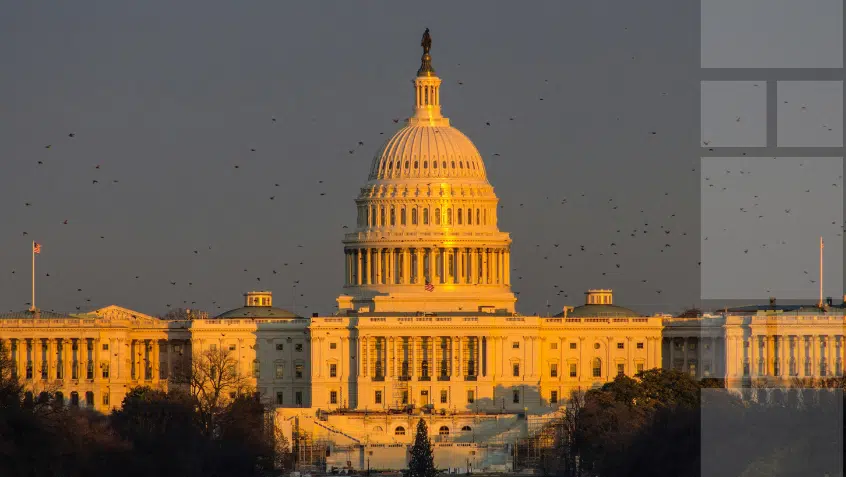
But the release of the president’s request does officially kick off those discussions. The next step is for Congress to formally consider the request. Most immediately, this will involve HHS Secretary Kennedy appearing before several House and Senate Committees with jurisdiction over health care policy and funding. Lawmakers will then work to craft and pass spending legislation for all federal agencies by September 30. When this deadline is missed, as it often is, Congress may rely on shorter-term stop gap measures while they finalize the bills.
As this process advances, the Medicare Rights Center will continue to advocate for strong funding and support for programs that serve current and future Medicare beneficiaries, as well as their families and communities. This includes rejecting reconciliation efforts that build on HR 1 or otherwise jeopardize beneficiary health and well-being.
The Medicare Rights Center will continue to advocate for strong funding and support for programs that serve current and future Medicare beneficiaries
We welcome thoughtful, respectful discussion on our website. To maintain a safe and constructive environment, comments that include profanity or violent, threatening language will be hidden. We may ban commentors who repeatedly cross these guidelines.
4 Comments on “President’s Budget Request Targets Vital Programs”
Cynthia J Fuller
April 9, 2026 at 5:38 pm
It would seem to me that combining some departments would lower cost for administrative positions and duties. Major companies do this all the time. Many programs do need to be looked at the see if they are actually doing as they were intended. I think it is a good idea to look at everything and every department considering the amount of fraud that has been discovered in other areas. Using technology is an excellent is and should be a money saver also.
This is a horrid proposal. I couldn’t afford to heat my home if they eliminate the LIHEAP program. This is once again targeting the most vulnerable of our society for the benefit of the wealthy. Medical care should not be privatized it should be universal. We should not be eliminating things that are vital for the elderly and the disabled to survive.
This I going to hurt our seniors in a big way. They rely on the electric program significantly especially now with the cost of food and gas. They do not rely on the SHIP program near as much. I am a strong supporter of our President but I completely disagree with this.
More than 67 million people rely on Medicare—but many still face barriers to the care they need. With your support, we provide free, unbiased help to people navigating Medicare and work across the country with federal and state advocates to protect Medicare’s future and address the needs of those it serves.








 Follow Us on Bluesky
4 Comments on “President’s Budget Request Targets Vital Programs”
Cynthia J Fuller
April 9, 2026 at 5:38 pmIt would seem to me that combining some departments would lower cost for administrative positions and duties. Major companies do this all the time. Many programs do need to be looked at the see if they are actually doing as they were intended. I think it is a good idea to look at everything and every department considering the amount of fraud that has been discovered in other areas. Using technology is an excellent is and should be a money saver also.
Michelle Solimene
April 9, 2026 at 6:15 pmThis is a horrid proposal. I couldn’t afford to heat my home if they eliminate the LIHEAP program. This is once again targeting the most vulnerable of our society for the benefit of the wealthy. Medical care should not be privatized it should be universal. We should not be eliminating things that are vital for the elderly and the disabled to survive.
Tracey Duffey
April 10, 2026 at 8:19 amTypical. Remove help to the most in need to pad the pockets of the wealthy. This administration is disgusting.
Lisa Wishoun
April 10, 2026 at 8:58 amThis I going to hurt our seniors in a big way. They rely on the electric program significantly especially now with the cost of food and gas. They do not rely on the SHIP program near as much. I am a strong supporter of our President but I completely disagree with this.