Last month, U.S. Senator Lisa Blunt Rochester, Senate Finance Committee Ranking Member Ron Wyden, Senate Democratic Leader Chuck Schumer, along with 13 additional co-sponsors, introduced the Medicare Cost Cap Act. The bill would create, for the first time, an out-of-pocket cap on Medicare beneficiary cost sharing in Original Medicare.
The Need for a Medicare Cost Cap
Beneficiaries who elect Medicare Advantage coverage have protection against annual cost sharing above certain thresholds. The same is true for people with employer-sponsored and Marketplace coverage, but people with Original Medicare face potentially unlimited costs unless they purchase additional supplemental insurance like Medigaps or are eligible for Medicaid. This can spur many people to choose Medicare Advantage.
People with Original Medicare face potentially unlimited costs unless they purchase additional supplemental insurance.
A cap on out-of-pocket expenses in Original Medicare would guarantee protections from unlimited cost-sharing, help address beneficiary affordability challenges, and level the playing field between Original Medicare and Medicare Advantage, better ensuring that beneficiaries have a real choice in how they access their Medicare benefits.
The Bill Would Ease MSP Access
The bill would also strengthen and enhance programs that help lower-income Medicare beneficiaries afford their Medicare premiums.
The Medicare Savings Programs (MSPs) are essential—but many eligible individuals are not enrolled, and many older adults and people with disabilities with tight budgets are ineligible for assistance because of modest savings or excess income.
The bill would make significant improvements to MSPs.
Consistent with our experience in New York and Medicare Rights Center’s longstanding policy recommendations, the bill would make significant improvements to MSPs. It would align eligibility criteria across Medicare cost-sharing programs and increase the income threshold to 200% of poverty ($31,300 for an individual in 2026). Increasing the stringent income eligibility limits across all states would help more older adults and people with disabilities living on limited incomes afford their premiums, cost-sharing, and care. It would also eliminate the asset test—reducing administrative burdens on both applicants and application-reviewers and encouraging, rather than penalizing, saving among those with limited incomes.
It also aligns income counting rules with the assistance program for Medicare prescription drugs, simplifying application processes, and establishes automatic enrollment for people who have already been approved for other Medicare low income supports.
The Medicare Rights Center Supports Modernizing MSP Access
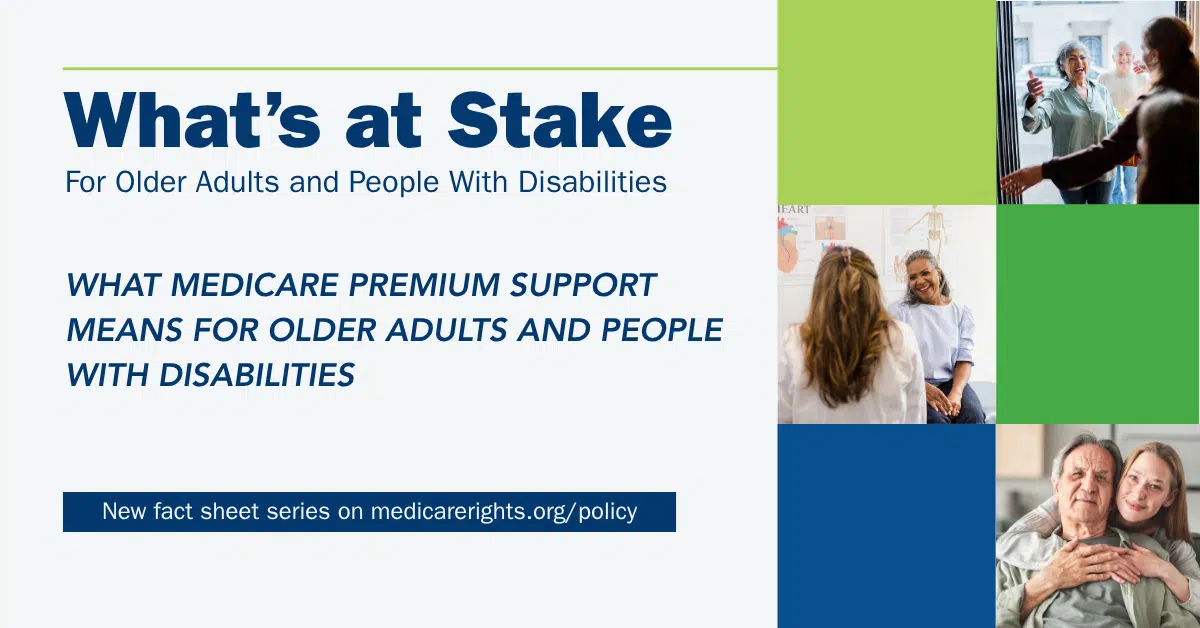
Boosting MSP uptake is a longstanding goal of the Medicare Rights Center. To make it clear what a difference this assistance can have in the lives of older adults and people with disabilities, and to support advocacy efforts to expand MSP eligibility and enrollment, in 2025 we compiled a set of case studies from our national helpline. Those real-world experiences highlight the obstacles beneficiaries commonly face when trying to get and keep an MSP and underscore the importance of the program.
Boosting MSP uptake is a longstanding goal of the Medicare Rights Center.
We also have a long history of identifying state level interventions to ease MSP access. In New York, we advocated for an MSP eligibility expansion that is helping nearly 300,000 more New Yorkers get these vital benefits. We also worked to advance legislation automating MSP enrollment for people with Extra Help, using information already on file with SSA. This modernized approach reduces entry barriers for New Yorkers and administrative burdens on state agencies, making the system more efficient and equitable.
There is also a very real human cost to anemic and curtailed MSP enrollment. A 2025 study in the New England Journal of Medicine links losing Medicare cost assistance with significant increases in mortality. Its authors issued a memo applying that research to HR 1’s MSP streamlining rule delay, warning it “could result in 18,200 additional deaths among Medicare enrollees every year.”
Looking ahead, we will continue to advocate for MSP reforms across the country, including by restoring and building upon these changes.
We welcome thoughtful, respectful discussion on our website. To maintain a safe and constructive environment, comments that include profanity or violent, threatening language will be hidden. We may ban commentors who repeatedly cross these guidelines.
One Comment on “Senate Finance Committee Members Introduce Bill to Reduce Medicare Out-of-Pocket Costs, Improve Access to Medicare Savings Programs”
Laura Justiss
July 29, 2026 at 7:57 pm
In principle, increasing income thresholds for MSPs is a stellar plan. However, in states with a limited tax base and revenues, this initiative will be very difficult to effectuate. I’m a volunteer Medicare counselor in Missouri. Medicaid and MSP income thresholds are abysmally low. Given the legislative hurdles for our state, both politically and practicably, this is a non-starter. A proposal is pending to eliminate the state income tax in favor of a sky high sales tax (it’s already close to 10%, including groceries). State taxes on capital gains were eliminated last session solely to boost support for Republican state politicians.
Medicare Advantage Plans are enormously profitable. Commissions per policy were recently increased to $700. Numerous reports (including Congressional reports, KFF publications and articles in major newspapers) have been published re abuses by these plans: 1) coverage denials (though claims are legitimate); 2) permissible network dropouts by providers at any time, thereby denying coverage to beneficiaries who, in good faith enrolled in these plans b/c their providers were presumably in network; 3) upcoding of beneficiaries by sending a nurse to beneficiaries’ homes, under the guise of “helping them,” with healthcare management, who then upcode their conditions, enabling plans to charge Medicare more for their treatment; 4) aggressive marketing strategies, including cold-calling, misleading TV ads, etc.
This template may have worked well in New York State (I’m a former NYC resident), but for states like Missouri, it will not be easily replicated.. Kindly reconsider the reality of state budgets before imposing an unfunded mandate.
Medicare Advantage Plans are where the money is. Curtail their abuses if you seriously wish to preserve Medicare and improve value for beneficiaries. While these plans advertise a maximum out-of-pocket limit for health services, denials for legitimate claims are legion. Appeal process is sufficiently daunting that beneficiaries accept these denials and absorb the costs or go without care.
More than 67 million people rely on Medicare—but many still face barriers to the care they need. With your support, we provide free, unbiased help to people navigating Medicare and work across the country with federal and state advocates to protect Medicare’s future and address the needs of those it serves.











 Follow Us on Bluesky
One Comment on “Senate Finance Committee Members Introduce Bill to Reduce Medicare Out-of-Pocket Costs, Improve Access to Medicare Savings Programs”
Laura Justiss
July 29, 2026 at 7:57 pmIn principle, increasing income thresholds for MSPs is a stellar plan. However, in states with a limited tax base and revenues, this initiative will be very difficult to effectuate. I’m a volunteer Medicare counselor in Missouri. Medicaid and MSP income thresholds are abysmally low. Given the legislative hurdles for our state, both politically and practicably, this is a non-starter. A proposal is pending to eliminate the state income tax in favor of a sky high sales tax (it’s already close to 10%, including groceries). State taxes on capital gains were eliminated last session solely to boost support for Republican state politicians.
Medicare Advantage Plans are enormously profitable. Commissions per policy were recently increased to $700. Numerous reports (including Congressional reports, KFF publications and articles in major newspapers) have been published re abuses by these plans: 1) coverage denials (though claims are legitimate); 2) permissible network dropouts by providers at any time, thereby denying coverage to beneficiaries who, in good faith enrolled in these plans b/c their providers were presumably in network; 3) upcoding of beneficiaries by sending a nurse to beneficiaries’ homes, under the guise of “helping them,” with healthcare management, who then upcode their conditions, enabling plans to charge Medicare more for their treatment; 4) aggressive marketing strategies, including cold-calling, misleading TV ads, etc.
This template may have worked well in New York State (I’m a former NYC resident), but for states like Missouri, it will not be easily replicated.. Kindly reconsider the reality of state budgets before imposing an unfunded mandate.
Medicare Advantage Plans are where the money is. Curtail their abuses if you seriously wish to preserve Medicare and improve value for beneficiaries. While these plans advertise a maximum out-of-pocket limit for health services, denials for legitimate claims are legion. Appeal process is sufficiently daunting that beneficiaries accept these denials and absorb the costs or go without care.